River Walk Dental Orthodontics

Categories
Dental care

How to Stop Bleeding Gums: Home Remedies and Professional Care

Why Do Gums Start Bleeding

Bleeding gums are often noticed during simple daily routines. Some people see it while brushing their teeth. Others notice it when they floss before going to bed. The bleeding is usually small, yet it can still cause concern. Many patients eventually begin searching for “how to stop my gums from bleeding.”

Gum irritation often starts near the gums. Plaque tends to collect in those spaces. When it stays there, the gums may begin to react. Bacteria settle in that buildup and stay close to the gum tissue. As the gums respond to the irritation, bleeding may start to appear.

The Centers for Disease Control and Prevention reports that periodontal disease affects many adults across the United States. Around half of individuals over the age of thirty have signs of the condition. Early stages often involve inflamed or bleeding gums.

Why Some People Notice Bleeding While Brushing

Gums are sensitive by nature. When they are healthy, brushing normally does not cause bleeding. Things change when inflammation develops. Even soft brushing can begin to irritate the tissue.

Plaque is often the starting point. It gathers along the gumline during everyday routines. The plaque along the gumline can hold bacteria. As they remain there, the gums may become irritated. Swelling and tenderness can gradually develop.

Gum bleeding can develop for more than one reason. Tobacco use may irritate the tissues and slow their natural recovery. Hormone fluctuations sometimes make the gums react more strongly than usual. Certain prescriptions may also affect oral tissues. Low levels of important vitamins can raise the chance of bleeding. In many cases, the problem develops slowly. People often overlook the early signs until bleeding becomes more frequent.

How To Stop My Gums From Bleeding Through Daily Oral Care

Seeing blood during teeth cleaning often leads people to search “how to stop my gums from bleeding”. The instinct is to leave the gums alone for a while. In reality, plaque tends to remain along the gumline when cleaning stops.

Dental professionals usually recommend continuing with careful cleaning. Using a soft brush helps remove plaque close to the gums. The areas between teeth need attention as well. Plaque tends to stay there if it is not removed. As these habits continue day after day, the gums often begin to improve.

What Home Remedies May Help Stop Bleeding Gums

When gum tissue feels irritated, a few basic habits sometimes help while the mouth begins to recover. Warm saltwater rinses are commonly recommended. The solution is mild and helps clear away debris that can remain around the gums after meals.

Water can help the mouth in quiet ways. Drinking it regularly encourages saliva to form. Saliva then moves around the mouth and clears away small bits of food that remain after meals. Bacteria have a harder time building up in that environment. These steps may occasionally help stop bleeding gums for a short period. When the problem does not settle, professional dental advice becomes important.

Why Diet Matters for Healthy Gums

People often focus on cleaning habits when gum issues develop. Nutrition rarely comes up right away. But gums depend on nutrients like the rest of the body. If the diet doesn’t contain the main vitamins, the tissue may not remain as strong. That finally leads to irritation.

Vitamin C helps keep the strength of connective tissue. A shortage of this nutrient can affect the stability of that tissue. The National Institutes of Health notes that bleeding gums may occur more often when vitamin C levels are low.

What we eat plays a big role too. Fruits and vegetables are often recommended. Many other whole foods also provide nutrients that help support oral tissues.

How Professional Bleeding Gums Treatment Helps

Plaque forms on the teeth as part of normal daily activity. Daily cleaning helps clear much of it away. Sometimes small amounts remain along the gumline or between teeth. When that happens repeatedly, the buildup can gradually harden into tartar. Once this occurs, brushing alone cannot remove it. Professional bleeding gums treatment is usually needed at that stage.

Professional cleanings address tartar that has attached to the teeth. Dental clinicians use specialised instruments to remove these hardened deposits. The process focuses on areas close to the gumline as well. In situations where inflammation has advanced, scaling and root planing may be recommended. The procedure focuses on cleaning bacteria from beneath the gums. As the area becomes cleaner, the gum tissue often begins to improve slowly.

When Bleeding Gums May Signal Gum Disease

Occasional bleeding may seem minor. When it happens frequently, however, it can signal gingivitis. Dentists describe this as the earliest form of gum disease. In many cases, it improves when oral hygiene habits change, and appropriate bleeding gums treatment is provided.

Without attention, the problem may develop further. Gingivitis can result in periodontitis. It is a condition that affects the structures supporting the teeth, including bone. Public health data from the CDC suggests that about 47 per cent of adults over the age of 30 in the United States experience some form of periodontal disease.

How Dentists Diagnose Gum Problems

When gum health is evaluated, dentists observe several signs. Swelling and redness are often noted first. Areas where plaque has gathered along the gumline are also considered.

The space between the teeth and the surrounding gums is also evaluated. When the gums are healthy, they remain closely adapted to the tooth surface. When disease begins to develop, those spaces can gradually become deeper. Dental X-rays may also be taken to view the bone around the teeth and identify possible early damage.

Why Early Care Helps Stop Bleeding Gums

Swollen gums often improve when attention is given early. For many patients, things start improving after a dental cleaning. Once the buildup around the gums is cleared, the change can be noticeable. Daily care habits matter too. When daily cleaning becomes consistent, the gums often begin to settle.

When the condition advances, the situation becomes more complicated. Infection may extend to deeper structures that support the teeth. Addressing gum problems early may stop bleeding gums and help keep the teeth stable.

FAQs

What do I need to stop bleeding gums?

Bleeding gums can be stopped by brushing softly. Brush up the gum and floss 1 time a day. The warm salt water rinse could be used to calm down the gums. In case of continued bleeding, a dentist is supposed to examine it.

Why does brushing of the gums result in bleeding?

Plaque sitting along the gumline can irritate the gums. Once they become swollen, even gentle brushing may cause some bleeding.

When is the time to go see the dentist?

A dental visit should be made in case it takes longer than a week or if it recurs.

Do bleeding gums heal spontaneously?

The initial irritation of the gums could be resolved with the improvement of the process of brushing and flossing.

Final Thoughts

Bleeding gums usually appear for a reason. It usually means the gum tissue has become irritated. When the issue is ignored, plaque may continue to collect around the gums and nearby structures. Bacteria can start growing too.

Addressing how to stop my gums from bleeding usually involves a broader approach. Oral hygiene habits must remain consistent. Nutrition supports the condition of gum tissue. Going to the dentist helps keep a healthy mouth too.

Bleeding gums usually appear for a reason. It usually means the gum tissue has become irritated. When the issue is ignored, plaque may continue to collect around the gums and nearby structures. Bacteria can start growing too.

Gum bleeding that continues deserves attention. A professional exam can help decide the best gum disease treatment. Early care can often stop bleeding gums and support healthier gums.

Categories
Dental care

Dental Crown Procedure: Step-by-Step Guide

What Is A Tooth Crown Procedure

As time goes by, a tooth may become more fragile. Damage from decay, an accident, or worn dental work may leave it vulnerable. In situations like this, dentists sometimes place a crown on the tooth. The crown surrounds the outer part and adds support. That added protection helps the tooth deal with normal biting pressure.

The phrase tooth crown procedure simply describes the treatment used to place that crown. It usually begins with a dental visit where the tooth is examined closely. After preparation, a crown is made so it fits properly. When it is finally placed, the tooth gains support and can continue doing its job.

Why Is A Crown Procedure Recommended

Not all teeth can be filled with a filling. Massive regions of decay may weaken it. Cracks can make it fragile. The teeth under root canal treatment also tend to fall in this category. In such situations, dentists usually put on a crown. And without such protection, the tooth can be broken while eating.

The shape of the tooth is also rebuilt with a crown. This causes biting to be rebalanced once again and prevents nearby teeth from becoming affected.

Who Is A Good Candidate For A Crown Procedure

Many patients can receive a crown. The roots should be strong. The gums should also be healthy. If an infection exists inside the tooth, treatment comes first. A healthy foundation gives the crown a better chance of lasting.

Children almost never require crowns. It happens mainly when a tooth is badly damaged. Adults need them more frequently. Teeth wear down over time. Sometimes they crack. A short exam helps the dentist make the decision.

What Happens At The First Visit

The first appointment is mostly about evaluation. The dentist studies the tooth carefully. X-rays are usually taken. They show the root and the bone around it. This helps the dentist decide if the tooth can hold a crown and move ahead with the tooth crown procedure.

Sometimes an infection is found inside the tooth. A root canal may be done before moving forward. That clears the problem first. If the tooth looks stable, the crown plan is set. The tooth is then scheduled for preparation.

How Is The Tooth Is Prepared?

A crown should be prepared first before placing it. The dentist refigures the outer surface to a small extent, and very little is removed. This enables the crown to fit in the tooth well. Numbing medicine will ensure that the area is comfortable.

The shaping is done with care. The dentist examines the tooth from various angles. They cannot take away too much because there has to be enough tooth to hold the crown. It is aimed at a safe fit and a realistic appearance.

How Impressions Are Taken During The Process Of A Crown

After shaping the tooth, the dentist makes a record of its form and the patient’s bite. Some offices use digital scanners that take quick 3D pictures. Other offices still use soft putty to make a mold.

The impression or scan goes to a dental lab. Technicians use it to craft a crown that matches the tooth next to it. Accuracy here makes the crown feel right and work well.

Why A Temporary Crown Is Placed

The dentist places a temporary crown on the prepared tooth. It remains there until the final crown is ready. The cover protects the tooth. It also helps keep sensitivity down. With the temporary crown in place, the patient can eat with more comfort.

Temporaries are not as strong as the real crown. Sticky candy or very hard foods can pull them off. They are a short-term solution until the permanent crown arrives.

How The Permanent Crown Is Made In The Lab

Laboratory technicians build the permanent crown from the model or digital scan. Porcelain and ceramic are commonly used for it. Metal crowns are also used. Porcelain and ceramic tend to look more like natural teeth. Metal is very strong for back teeth.

The lab checks the color of the crown and adjusts the shape. It should blend with the surrounding teeth. The chewing surface is shaped as well. That helps the bite feel right. Making the crown usually takes around one to two weeks.

What Happens When The Final Crown Arrives

The patient returns when the crown is finished. The temporary crown is removed. The tooth is cleaned once more. After that, the new crown is placed. This step checks the fit and the bite.

The dentist studies the crown from different sides. A small change may be needed. When the fit looks correct, dental cement is used. The extra cement is removed, and the crown then stays fixed on the tooth.

What To Expect After The Process Of A Crown

This is due to the fact that the tooth might have a slight difference within a few days after the placement of the crown. Hot or cold sensitivity to drinks is quite typical at this age, and it goes away. In the case of a slight pain, over-the-counter medicine can be used.

A crown also needs regular care. Look after it like a regular tooth. The cleaning method should not change. Dental checkups are still important. At the visit, the dentist checks the crown again. They see if it is tight and also look at the tooth under it.

How To Care For Your Crown So It Lasts

Brush twice daily and clean around the crown well. Floss along the gum edge. This part needs attention. Plaque can build up there quickly. Clean gums help the crown remain stable.

Some patients grind their teeth at night. The dentist may advise a nightguard. It covers the teeth while sleeping. This helps protect the crown from cracks.

What Crowns Are Made From

The material of the crown matters. Porcelain and ceramic are often chosen for front teeth because they look more like natural teeth. Metal crowns are also used. These crowns are very strong. They work well for back teeth because biting pressure is higher there.

Some crowns use both metal and porcelain. This gives strength along with a natural appearance. The dentist usually explains which option fits the tooth.

Can The Crown Procedure Be Done In One Visit

A digital scanner is used by the dentist to capture the exact shape of the tooth. The crown is then milled in the office using that scan. The whole process is faster than sending work to a lab. Because of this, a temporary crown is often avoided.

Not all cases are right for same-day crowns. Complex shapes or special colour matching sometimes still need a lab. Your dentist will recommend the best option.

FAQs

Do tooth crown procedures feel painful?

The dentist anesthetizes the region. Owing to that reason, the majority of people do not experience pain. During the work, some pressure can be experienced. The tooth may be tender in the short term following the visit.

What is the length of the procedure with a crown?

Two visits are common. One visit prepares the tooth. Another one is for placing the crown. Machines are also provided in some dental offices for making crowns the same day.

Why do I need a temporary crown?

A prepared tooth needs protection. The temporary crown covers it. This keeps the tooth safe while the real crown is made in the lab.

What is the cost like?

Costs vary quite a bit. Price is determined by the material used. Crowns made of porcelain tend to be expensive. Part of the fee can be assisted by insurance coverage.

If a dentist suggests a tooth crown procedure, ask questions until things are clear. It helps to understand the materials and the timing. A clear plan makes the visit easier. Then the appointment can be booked and the tooth protected.

Categories
Dental care

Black Spot on Tooth: Causes and Treatment Options

Noticing A Black Dot on a Tooth

Sometimes people notice it in a quiet moment, maybe during brushing at night. Someone might notice it while looking in the mirror. Just a tiny dark speck resting on one tooth. At first, it seems unimportant. Maybe something left behind from chocolate or a dark drink. Still, a black dot on tooth catches attention because teeth are usually light and even in color. In some cases, the little mark stays exactly the same and does not change for a long time.

Sometimes the mark stays the same for months. Other times, it slowly grows darker or becomes easier to notice in photos or bright light. Dentists often say that even small spots deserve attention.

Tooth decay is still very common. In fact, the Centers for Disease Control and Prevention says that close to ninety percent of adults have had a cavity at some point in life.

What Causes Black Spots On Teeth

Not every dark mark means the same thing. Some black spots on teeth are simply stains that sit on the outer enamel surface. Others develop deeper inside the tooth structure. The appearance might look similar, yet the causes behind these spots can be very different.

Food and drinks are often responsible. Coffee and tea can slowly leave pigments on enamel. So can cola, and red wine. Tobacco is another major factor. Over time, these pigments attach to plaque and tartar, creating dark lines or dots along the tooth surface. Dental research describing pigment-related staining and bacterial black stains can be found here:

When A Dark Spot on a Tooth Is Actually Tooth Decay

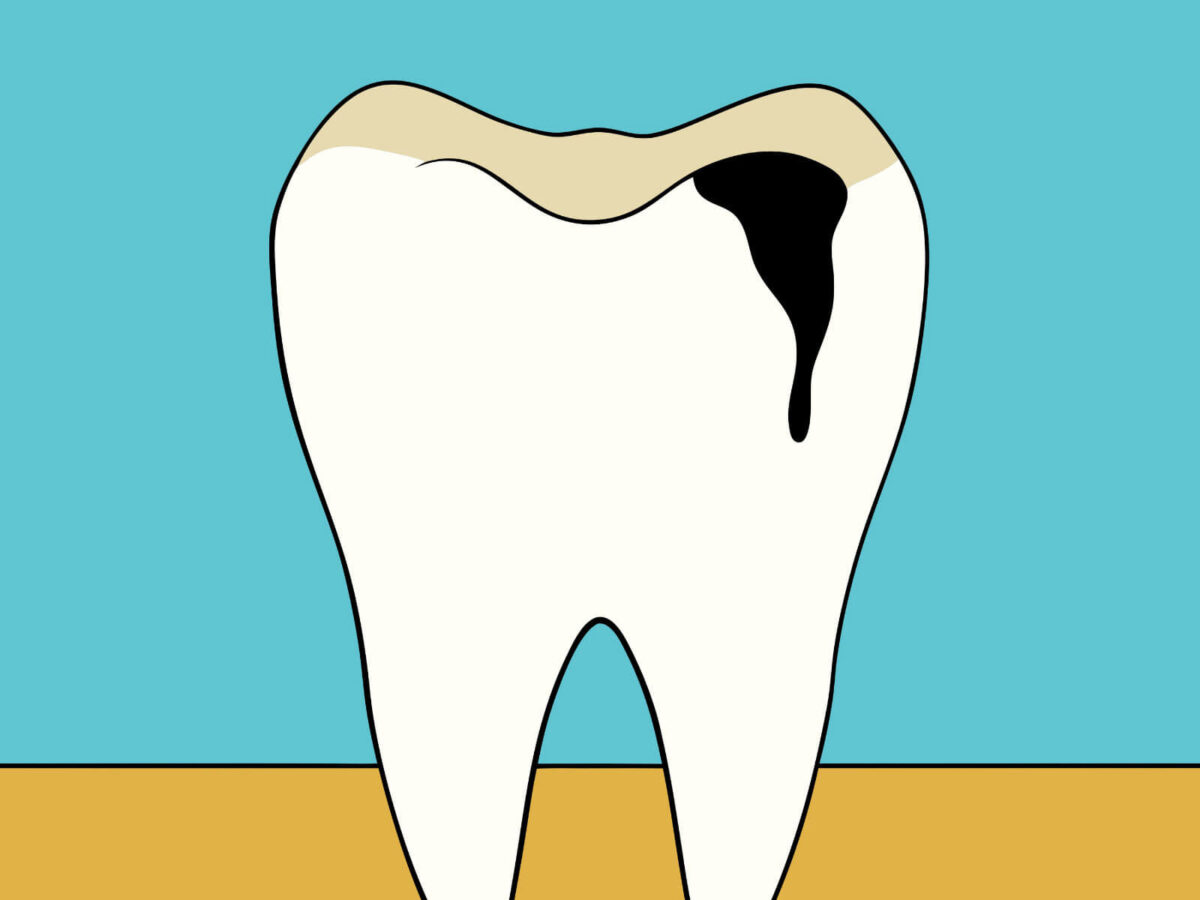
A dark spot on a tooth may occasionally be the first hint that something is happening beneath the surface. The mouth naturally holds many kinds of bacteria. During the day, they settle on teeth and form a thin layer. If that layer stays there too long, it can slowly damage the outer surface. Early on, the change may appear as nothing more than a tiny dark mark.

As the damage grows, the spot may become more noticeable. The tooth surface may not feel as smooth when dentists examine it with their instruments. Some patients begin to notice sensitivity when they eat sweets or drink something cold. When treated at an early stage, the repair is usually minor. If the problem is ignored, the damage can extend further into the tooth.

Injuries That Lead To Darkening Inside A Tooth

Not every black mark comes from bacteria or staining. Trauma can also change the colour of a tooth. A sports injury, a fall, or even biting something extremely hard may damage the inner pulp tissue.

If the inner pulp of a tooth dies, the tooth can gradually change colour. It may turn grey or even black over time. The discolouration often covers a wider area instead of appearing as a single dot. Medical information about pulp necrosis and internal tooth discolouration is explained here:

How Dentists Examine A Black Dot on a Tooth

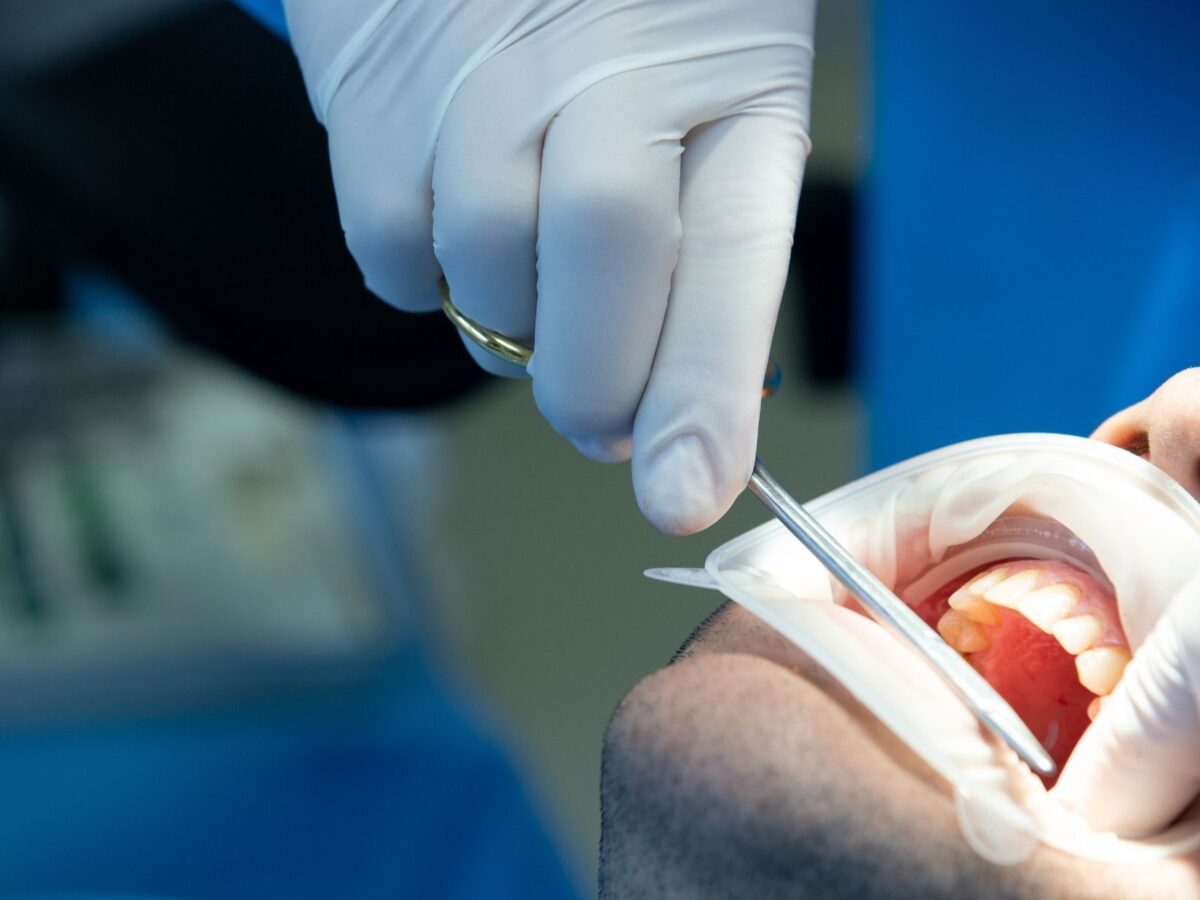
A dental visit for a black dot on a tooth often starts with a simple examination. Dentists use strong lighting to study the tooth surface. They may also touch the enamel lightly with small tools. The feel of the area helps guide the diagnosis. If the enamel feels smooth, it is often just a stain. A rough surface can sometimes indicate decay.

Dentists may suggest dental X-rays when they want a closer look for decay. The images highlight areas where the tooth layers have weakened. Cavities appear as darker shadows inside the tooth structure.

Professional Cleaning For Black Spots On Teeth

Sometimes the mark is only surface colour. Nothing serious. Many times it is addressed during a regular dental cleaning. Teeth gradually gather a hardened film that daily brushing cannot remove entirely. When that layer is cleared away, the tooth surface becomes smoother. During the final polish, many dark marks fade quite a bit.

A few stains are deeper than the surface and may not respond to normal cleaning. In these situations, dentists sometimes recommend whitening treatments. Dentists sometimes choose enamel microabrasion. This method lightly removes a thin layer from the stained enamel. Afterwards, the tooth often appears more even in colour. Many patients notice their teeth appear brighter after treatment.

What Dentists Do When Cavities Create Dark Spots

A dark spot on a tooth can sometimes be the first sign that decay has started underneath. Dentists usually deal with that by removing the weakened section of the tooth. The goal is simple. Stop the damage before it spreads further. Once the area is cleaned, the space is restored with a filling. The material is chosen to match the natural colour of enamel.

Now and then, the problem spreads beyond the outer layer of the tooth. The middle of a tooth contains soft tissue, and infection can develop there. Every tooth has soft tissue in the centre that may get infected. The tooth is then closed and sealed to keep bacteria away. A crown is often added afterwards to help support the tooth.

Why Some Treatments Turn Cavities Black

Some dental treatments intentionally darken the treated area. One treatment dentists sometimes use is called silver diamine fluoride. It comes as a liquid and is placed directly on the affected area. The goal is to slow down the damage inside the tooth. It also helps fight the bacteria involved and supports the enamel that has started to weaken.

However, the treated cavity usually turns dark or black. The discolouration is permanent, but the decay stops spreading.

Preventing Black Spots On Teeth

A clean mouth usually depends on small habits done daily. Bacteria and food particles collect on teeth after meals. Brushing twice each day helps remove that layer before it stays too long. The thin spaces between teeth are different. A toothbrush struggles there, so floss helps clear what gets stuck.

Another helpful step is reducing drinks known to stain teeth. Coffee and tea are two of the most common reasons enamel becomes discoloured. Research on beverage staining has shown that dark pigments from these drinks can stick to enamel and slowly change the colour of teeth.

When A Dark Spot Should Be Checked By A Dentist

Sometimes a small dark mark remains unchanged for years. In other cases, the spot grows slowly, becomes rough, or starts causing sensitivity. Those changes usually mean the tooth needs professional evaluation.

Dentists often remind patients that early treatment keeps problems simple. A tiny cavity may require only a small filling. If ignored for too long, the same cavity can develop into an infection that requires more complex procedures.

FAQs

Is A Black Dot On Tooth Always A Cavity

No. It may only be a stain on the surface of the tooth. Dentists still like to check these spots.

Can Black Spots On Teeth Be Removed

Many stains can be cleaned away by a dentist. If decay is present, treatment may be needed.

Why Does A Dark Spot on a Tooth Appear Suddenly

Stains sometimes build up over time. In some cases, enamel damage makes the area look darker.

Should A Dentist Examine A Small Black Spot

Yes. A quick dental visit helps find out what caused the mark.

If you spot a black dot on a tooth, it helps to get it checked. The mark may look small at first. Just a tiny dark speck. Still, it can sometimes signal the early stage of a dental problem. A dentist can look closely and tell what is going on. When problems are found early, treatment is usually much simpler.