River Walk Dental Orthodontics

Blog
Dental hygiene tips for healthy teeth & gums
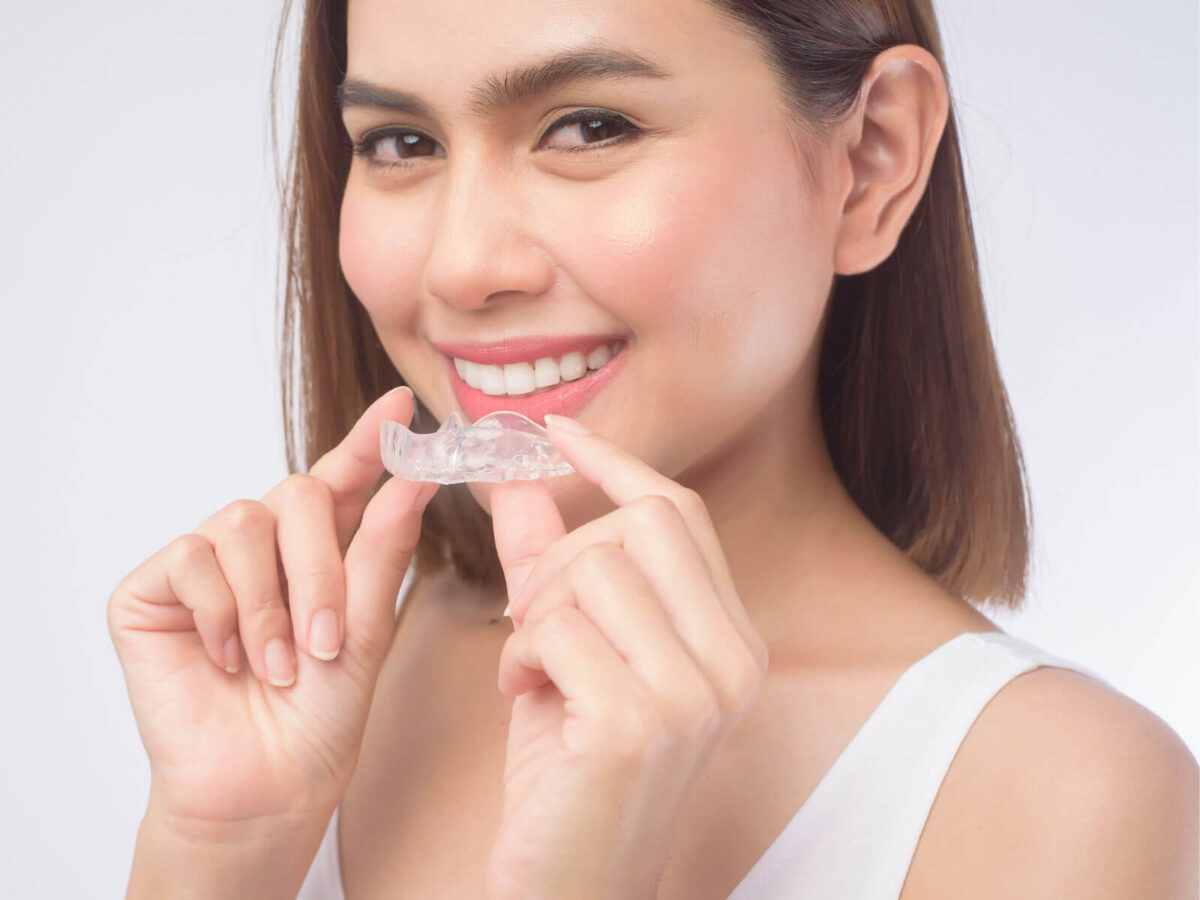
Pros and Cons of Invisalign: Is It Right for You?
Last spring, a patient in her mid-thirties asked me whether her colleagues would clock the trays in meetings. She’d already decided she wanted them. What she wanted from me was permission. Most conversations about the pros and cons of Invisalign start there, somewhere between wanting it to work and wanting to hear the catch first.
People walk in with a short wish list: invisible, removable, faster than metal. Half of that holds up under scrutiny. The other half needs a real caveat attached to it, not a marketing gloss.
The real deciding factors are your bite, your willingness to keep trays in for most of the day, and whether your case is mild enough for plastic to do the job braces would otherwise handle.
TL;DR
- Clear trays beat metal braces on visibility, and that’s the reason most adults choose them.
- Wear time is where it falls apart. Twenty to twenty-two hours daily, or the plan slips.
- Cost sits close to braces these days, close to $5,100 before insurance.
- Treatment usually lands somewhere in the 12 – 18 month range. Though, mild crowding can finish well before that.
- Severe rotation or major bite work still tends to need fixed braces.
What Are the Biggest Pros of Invisalign
Nearly invisible. This is the one that sells itself. Patients tell me colleagues sit through entire meetings without noticing anything.
Removable for eating and brushing. No brackets catching popcorn, no threader floss at 11 pm. Pull them out, eat, brush, put them back.
Fewer chair emergencies. With braces, a bracket popping off mid-sandwich means an unscheduled visit.
Easier on your gums. Anyone who has had braces remembers the first fortnight, wires rubbing the inside of the cheek raw until the tissue toughens up or you resort to wax. A tray has smooth edges and no protruding parts, so that particular misery never starts.
Fewer appointments. Most of my aligner patients come in every six to eight weeks, sometimes less.
You can see where it ends. The scan gives you a projected result before you start, so you know roughly what you’re paying for. Braces ask for more trust upfront.
What Are the Real Cons of Invisalign
It only works if it’s in your mouth. Twenty to twenty-two hours a day, every day. Plenty of patients fall short without meaning to, and the plan quietly slips behind schedule.
Not built for every bite. Severe rotation and big skeletal discrepancies ask for more force than a tray applies. Braces still win those cases.
Easy to misplace. A tray wrapped in a napkin and tossed with the lunch tray is a story I’ve heard more times than I can count. Replacements aren’t free.
Attachments change the look. Many cases need small tooth-colored bumps bonded to the teeth so the tray has something to grip. Invisible from across a room, noticeable up close.
Refinements are common. If teeth don’t track the way the plan predicted, you get a second round of trays. That adds months nobody budgeted for.
Coffee becomes a decision. Water is the only thing you can drink with trays in. Everything else means taking them out, then brushing before they go back, which is why grazing all day quietly eats into your wear time.
How Does Invisalign Cost Compare
Invisalign cost has crept close enough to braces that price rarely tips the decision anymore. National averages sit around $5,100 before insurance. A mild case lands under that, while full-arch work on a complicated bite can push past $8,000.
Metal braces sit near $5,000 for a full case, though plenty of practices quote under that. Ceramic brackets push that higher, close to what aligners run. The gap that mattered a decade back has mostly closed.
Where the two separate is the low end. A limited braces case correcting minor movement can come in under $3,000, which aligners rarely match.
Insurance treats them about the same. Whatever orthodontic benefit your plan carries applies whichever route you take, usually capped somewhere near $1,500 to $2,000 in lifetime coverage.
How Does Invisalign Treatment Time Compare to Braces
Most adult cases I plan out land somewhere in the 12 to 18 month range for Invisalign treatment time. Small spacing gaps sometimes finish in six, though that’s the exception rather than the norm.
Braces cover similar ground for a moderate case. Severity drives the timeline far more than the appliance does.
Your finish date depends on you more than on the trays. Skip a few hours here and there and a 14-month plan drifts into an 18-month one, without anyone deciding that on purpose.
Curious Whether Invisalign Fits Your Case?
A quick scan tells you more than any comparison chart online.
How Does Invisalign Differ From Braces Day to Day
Invisalign vs braces mostly comes down to small daily habits. Braces stay put no matter what you’re doing, while trays come out every time you eat or drink anything beyond water.
That freedom cuts two ways. You keep your normal diet, though you also lose the discipline braces enforce simply by being stuck to your teeth.
Braces need the occasional wire adjustment in the chair. Aligners ask less of me and more of you: switch trays on schedule, show up for the periodic scan, keep track of your own wear time.
What Attachments and Buttons Actually Do
Some cases need small tooth-colored bumps bonded onto the teeth, called attachments, so the tray has something to grip for trickier movements.
From across a room, nobody notices them. Up close, your teeth won’t be perfectly smooth for the length of treatment, which is the kind of detail I’d rather you hear at the consult than discover afterward.
Rubber bands sometimes join the setup too, usually for bite corrections. That part surprises people who assumed Invisalign meant zero extra hardware.
Who Is Invisalign Not a Good Fit For
Crowding beyond a few millimeters of shortfall often needs more force than plastic applies well. Braces, or a combined approach, tend to win here.
Rotation and vertical movement are a tougher ask for trays alone. An impacted canine that needs easing down into the arch usually calls for a bracket and a chain.
Teenagers who won’t reliably hit the wear-time mark sometimes do better with a fixed appliance. A bracket can’t be left in a locker or forgotten in a napkin at lunch.
How Much Discipline Does Invisalign Actually Require
More than most people expect walking in. Twenty-two hours leaves two hours total, across a whole day, for every meal and brushing session combined.
Patients who treat it loosely, wearing trays mostly at night, tend to stall out. They end up needing refinement aligners to finish what the original plan should have covered.
I’d rather tell someone that upfront than have them find out three months in, wondering why their case is suddenly behind schedule.
FAQ
Which one hurts less – trays or brackets?
Both bring some pressure with each new tray or wire adjustment. In my experience, patients describe the trays as a dull ache for a day or so, which is easier to live with than a wire digging into a cheek.
Will Invisalign correct a bite issue?
Trays handle mild and moderate bite work without much trouble. Anything skeletal, or a deep bite that needs real vertical control, tends to land back with braces.
When do I move to the next tray?
Most plans put you on a new one each week. Some stretch it to a fortnight if the movement is bigger.
Does dental insurance pay out the same for either option?
Most plans apply the same orthodontic benefit to either. Call your provider and confirm the number before you commit to anything.
Conclusion
Hold the pros and cons of Invisalign up against your own bite before the appeal of invisible trays does the deciding for you. The discretion is real, and so is the work of keeping trays in for twenty-two hours a day when nobody is checking.
Mild to moderate crowding, confident about the wear time? Strong option. Anything more complicated and you’re better off with a scan than a comparison chart.
Wondering If Invisalign Suits Your Smile?
Get a real answer based on your teeth, not a general estimate.